
Proven, not promised.
Your model measured on your silicon
Edge AI models delivered with accuracy, latency, and energy measured on your actual silicon. No simulator. No proxy board. Your chip, your numbers.
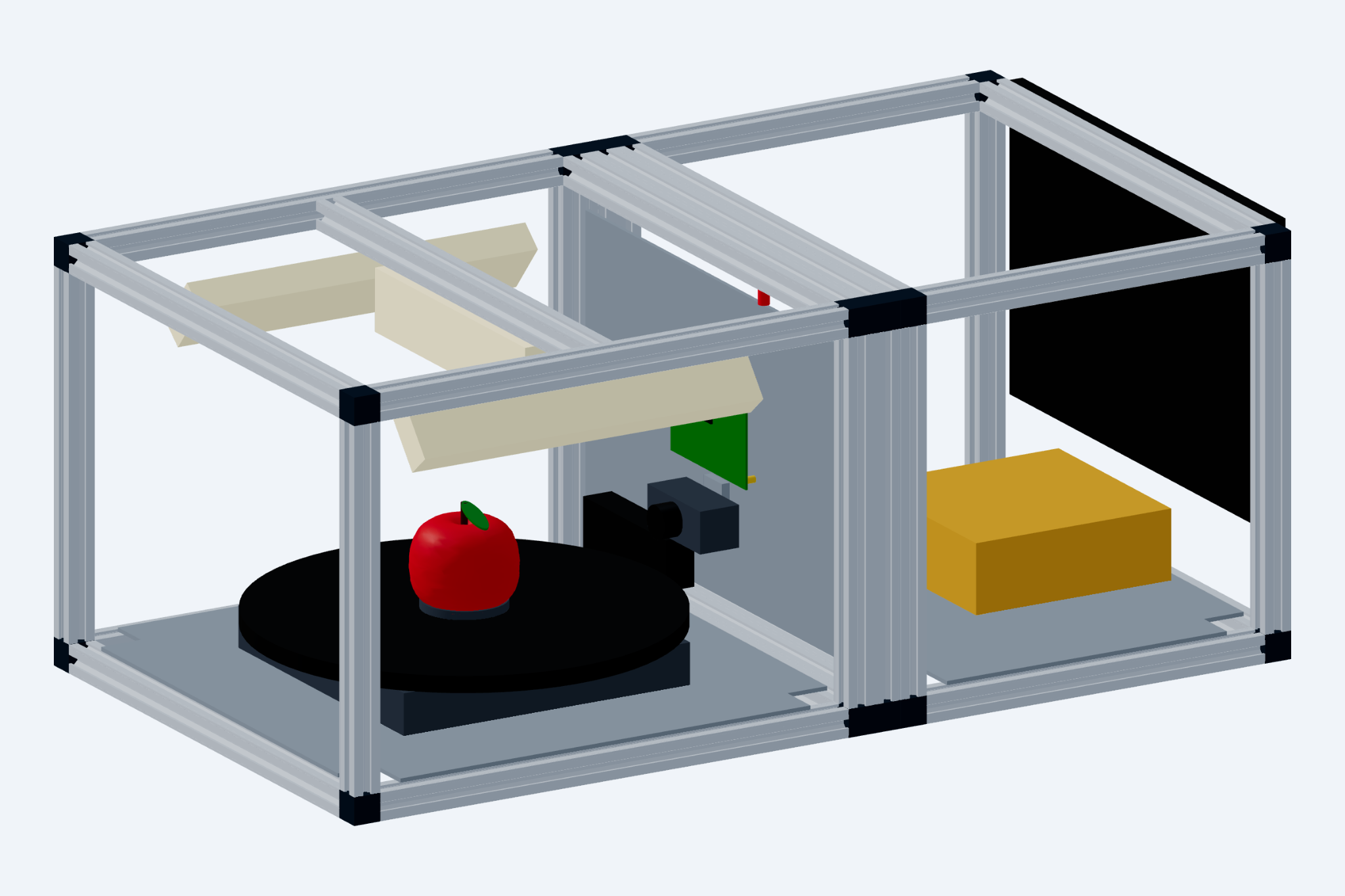
Hardware rig
The rig is the lab. Stimulus and measurement in one enclosure.
Condenser array, SPL calibration, glass-break stimulus playback.
Controlled illumination, scene replay, IR/RGB sensor chain.
Electrodynamic shaker, tri-axis stimulus, MEMS sensor chain.
Controlled gas flow, MOX sensor array, concentration logging.
Glass-break acoustic model
3-class detection. 91.4% cross-validation accuracy. Verified on customer silicon; rig-captured rows pending commissioning.
| Metric | Value | Methodology | ||
|---|---|---|---|---|
| 01 | Model Identity | |||
| Task class | Acoustic event detection | Customer-defined problem statement | ||
| Architecture | 1D-CNN, 3-layer | Auto-selected via rig search | ||
| Class labels | glass-break / impact / ambient | Predefined class taxonomy | ||
| 02 | Data Collection | |||
| Collection method | PENDING RIG COMMISSIONING | Closed-loop rig capture | ||
| Total labeled samples | PENDING RIG COMMISSIONING | Rig auto-label pipeline | ||
| Train / validation split | PENDING RIG COMMISSIONING | Stratified by class | ||
| 03 | Accuracy | |||
| Cross-validation accuracy | 91.4% | 5-fold stratified CV | ||
| False positive rate | 4.1% | Confusion matrix, ambient class | ||
| False negative rate | 6.2% | Confusion matrix, glass-break class | ||
| 04 | Latency (on-silicon) | |||
| Inference time (median) | PENDING RIG COMMISSIONING | 1,000-run on-chip timer | ||
| Inference time (p99) | PENDING RIG COMMISSIONING | 1,000-run on-chip timer | ||
| Frame pre-processing | PENDING RIG COMMISSIONING | Rig instrumentation | ||
| 05 | Energy (on-silicon) | |||
| Energy per inference | PENDING RIG COMMISSIONING | EnergyRunner methodology | ||
| Peak current draw | PENDING RIG COMMISSIONING | On-silicon shunt measurement | ||
| Sleep current | PENDING RIG COMMISSIONING | EnergyRunner methodology | ||
| 06 | Memory Footprint | |||
| Flash usage | 62 KB | Linker map analysis | ||
| RAM peak | 18 KB | Static analysis + runtime probe | ||
| Quantization | INT8 | Post-training quantization | ||
| 07 | MLPerf Tiny Alignment | |||
| Benchmark category | Keyword spotting (adapted) | MLPerf Tiny v1.1 reference | ||
| Scenario | Single-stream | MLPerf Tiny inference scenario | ||
| Closed-division conformance | In review | Self-certification path | ||
| 08 | Reproducibility | |||
| Rig identifier | CRY-RIG-001 | Physical rig serial number | ||
| Binary hash (SHA-256) | a3f7c1d9…b82e04 | Delivered binary checksum | ||
| Scorecard revision | 1.0.0 | Semantic versioning | ||
Latency, energy, power and rig-captured labeling rows pending rig commissioning. Accuracy and memory values measured on customer silicon via CRY-RIG-001.
View full scorecard methodology→Four properties that separate a silicon-verified scorecard from a simulator estimate
Auto-labeled data via real sensor chain
Your sensor generates the training corpus directly. No manual annotation pipeline, no synthetic proxies.
Training on your actual silicon
The model is built and optimized against the exact chip you ship, not a reference board standing in for it.
On-silicon energy measurement
Power draw is metered on your hardware during inference, giving you a real power envelope before procurement locks in.
Chip-agnostic operation
The rig connects to any target via the common gym interface. Switching silicon means swapping the module, not rewriting the workflow.
Measurement aligned to MLPerf Tiny and EnergyRunner methodology
Glass-break acoustic model, 3-class, customer silicon
Verified numbers from the first completed engagement. Latency, power, and auto-labeling rows are pending rig commissioning.
Rig-captured auto-labeling and on-silicon energy measurement are pending rig commissioning. Accuracy figure is from training data only and does not constitute a full MLPerf Tiny submission. Full scorecard will be published upon rig commission.
Engagement type
Bespoke Model Delivery
Modality
Acoustic (audio gym)
Silicon
Customer-supplied
Scorecard sections
8 of 8 defined
FIRST VERIFIED ENGAGEMENT
Glass-break acoustic model. 91.4% cross-validation accuracy. Customer silicon.
Choose your engagement
Every path ends with a scorecard tied to your silicon. Start at the gate you need.
ENGAGEMENT
Feasibility Gate
A time-boxed paid engagement. You send the chip, the sensor modality, and the detection problem. Chrysalis runs it through the rig and returns a go/no-go feasibility report with preliminary accuracy and latency estimates on your actual silicon. Low procurement friction. Qualifies the downstream fixed-price engagement before any large commitment is made.
ENGAGEMENT
Bespoke Model Delivery
A fixed-price project engagement. Chrysalis takes your chip and detection problem through the full closed-loop rig: auto-labeled data collection via your sensor chain, training, deployment, and measurement. Deliverable is a model binary plus the complete 8-section silicon-verified scorecard - accuracy, latency, and energy measured on your hardware, aligned to MLPerf Tiny and EnergyRunner methodology. The scorecard is a compliance artifact, not a summary report.
ENGAGEMENT
Acoustic Detection License
A pre-trained base model - glass break, wake word, or a named acoustic class - adapted to your chip and sold as a per-deployment license. Faster time-to-result for customers whose use case matches a catalog class. Adaptation is verified on your silicon and delivered with a scorecard. Phase 2 SKU; available after the base model has been validated across multiple chips.
ENGAGEMENT
Monitoring and Re-verification Subscription
An annual subscription per deployed model covering drift monitoring, triggered retraining, and a full re-verification scorecard run on the same rig. Your compliance documentation remains tied to a living, reproducible scorecard history rather than a point-in-time artifact. Creates the audit trail that regulated verticals require under the EU AI Act.
All engagements are chip-agnostic. Bring your silicon; Chrysalis brings the rig.
Common questions
Further methodology detail at the scorecard page. View the scorecard
START AN ENGAGEMENT
Send the chip, the problem, and the modality.
We return a go/no-go within the feasibility window.